
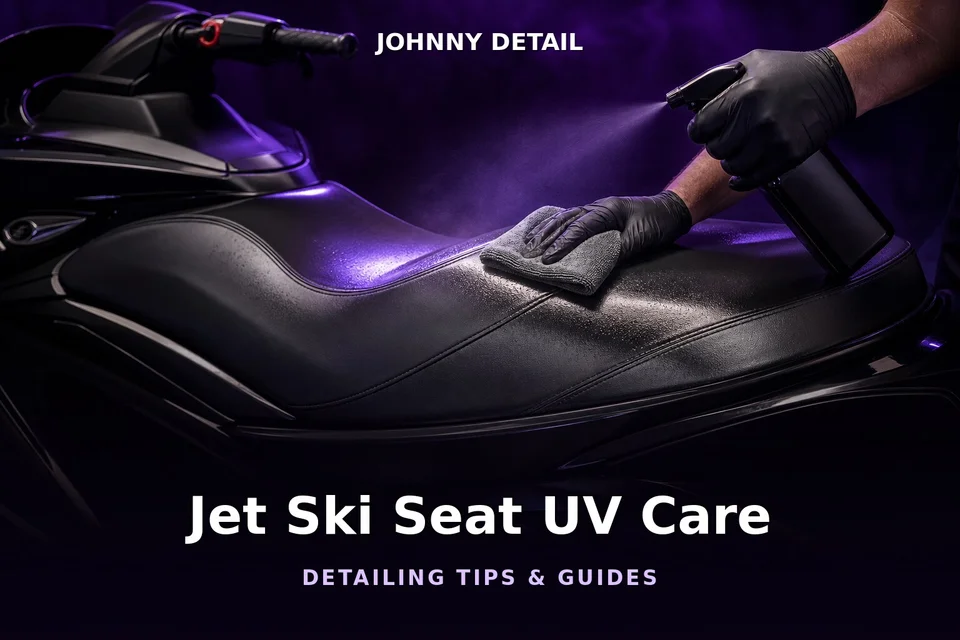
A useful review starts with material compatibility
UV protectant sprays for jet ski seats are often compared by shine, scent, or advertised longevity, but the first question is whether a product is approved for the exact upholstery. Personal-watercraft seats may use marine vinyl, coated textile, synthetic leather, thread, piping, foam, adhesive, and replacement panels. Check the watercraft and seat manufacturer’s documentation. A protectant that suits one vinyl formula may stain another, affect a printed panel, or leave the riding surface too slick.
Inspect the seat before selecting a spray
Clean a small area with a manufacturer-approved method and inspect after drying. Look for open seams, coating loss, hardening, cracks, dye transfer, embedded mildew, stains, and saturated foam. Fading and physical damage are not the same problem. A protectant cannot rebuild a failed topcoat, close a tear, replace stitching, or remove color change from deep weathering. Damaged or waterlogged upholstery should be assessed by a marine upholstery specialist.
Determine whether an old dressing is present. Greasy residue can attract soil, transfer to clothing, and interfere with a new product. Remove it only with a cleaner approved for the vinyl and thread. Avoid household solvents, abrasive pads, and aggressive scrubbing. Test the cleaner through a complete dry cycle because wet vinyl can temporarily look darker or more uniform than it will after drying.
Read beyond UV marketing language
Terms such as sunblock, marine grade, ceramic, UV shield, and professional do not establish performance on their own. Compare the label’s approved materials, surface preparation, finish, application method, ventilation, cure, maintenance, and exclusions. Look for clearly identified manufacturer testing if a performance claim matters, and be cautious with anonymous lab percentages, simulated seasons, or universal service-life statements. Real exposure varies with storage, use, washing, abrasion, and weather.
Review the safety data sheet and application environment. Low odor does not mean a product can be sprayed in a closed garage without ventilation. Follow directions for protective equipment, ignition sources, overspray, and storage. Keep all chemicals in their labeled containers and do not mix protectants with cleaners or another coating unless the manufacturers describe the system as compatible.
Compare finish and traction
A product may darken vinyl, increase gloss, alter surface feel, or leave a matte appearance. Those changes can be acceptable on a decorative panel but undesirable on a seat. The rider needs secure contact, and residue also can move to grips, controls, footwells, or traction mats. Choose products intended for seating surfaces and reject any result that remains greasy, tacky, or slippery after the specified process.
A single spray should not be assumed suitable for leather, clear plastic, painted panels, rubber, or every vinyl in the watercraft. Use the label surface by surface. Apply to a towel or applicator when that reduces overspray and the instructions allow it. Keep product away from controls, handles, footwells, fuel openings, ventilation paths, and hot or mechanical components.
Spot-test the complete application
Choose an inconspicuous section with the same material and condition as the visible seating area. Prepare it exactly as directed, apply only the stated amount, wipe or level it as required, and let it complete the maker’s cure process. Then inspect color, gloss, streaking, transfer, tackiness, and grip. A dry-to-touch check alone may not establish cure or compatibility. Contact the product maker if the result is uncertain rather than adding another layer.

Apply and maintain without a fixed schedule
When the test is acceptable, work in manageable sections with clean tools. Avoid flooding seams and perforations, where liquid can reach adhesive or foam. Remove excess and protect the seat from water, dust, and contact for the period stated on the label. Do not substitute a generic coat count or wait period borrowed from another product. More product may create residue without improving the result.
Wash the treated seat with compatible cleaner and observe how use and weather affect it. Reapply under the product maker’s maintenance guidance rather than a universal calendar. If the surface becomes slick or attracts dirt, clean it with an approved method and reassess the product. Do not keep layering protectant over unknown residue or coating failure.
Use storage as part of sun care
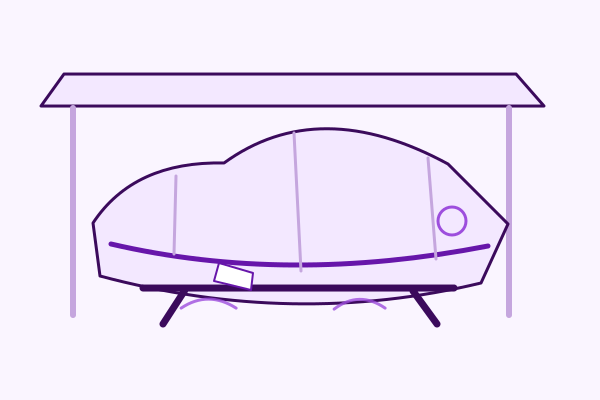
Shade and a compatible cover can reduce direct exposure, but a cover should fit without chafing and allow the ventilation specified by the watercraft maker. Clean and dry the seat before covering it, and do not trap wet gear or standing moisture. Inspect during storage for condensation, pests, loose seams, and transfer from the cover. A spray complements sensible storage; it does not make upholstery immune to sun or moisture.
Johnny Detail’s Sea-Doo detailing services and Sea-Doo detailing articles provide broader care context. The post-ride hull and flush guide covers washing and storage preparation, while an upholstery professional should handle torn seams, failed coatings, or wet foam.
Best UV Sunblock Sprays for Jet Ski Vinyl Seats – Review FAQ
- How do I choose a protectant for a jet ski seat?
Confirm the upholstery material in the watercraft or seat maker’s documentation, then select a product labeled for that material and marine exposure. Spot-test before full application.
- Can vinyl protectant be used on other watercraft surfaces?
Only where the product label allows it. Keep it off controls, grips, footwells, traction surfaces, and any area where residue could affect secure contact.
- Could protectant make the seat slippery or tacky?
Some products can change surface feel or gloss. Test a hidden area, apply only as directed, remove excess, and do not use a result that leaves the riding surface insecure.
- When should a vinyl protectant be reapplied?
Follow the product maker’s interval while considering use, washing, weather, and storage. Do not substitute a universal schedule for the label’s cure and maintenance directions.
- Can protectant be applied in a garage?
Check the label and safety data sheet for ventilation, protective equipment, ignition, and storage precautions. Move outdoors or improve ventilation if those instructions require it.
- Does a treated seat still benefit from a cover?
A compatible, well-fitted cover can reduce direct sun and debris during storage. Make sure the seat is clean and dry, and follow the watercraft maker’s ventilation guidance.
Manufacturer resources
Select the instructions matching your vehicle, material, and model year. These manufacturer resources provide care information for the brands and surfaces they cover.

Comments