
Choose the method after identifying the material
Steamers and extraction machines can be useful interior-detailing tools, but neither is the right answer for every stain or surface. Vehicle seats may combine coated leather, vinyl, woven fabric, foam, adhesives, perforations, sensors, heating elements, ventilation channels, and decorative trim. Begin with the vehicle manufacturer’s care guidance and any label attached to the upholstery. If the material or construction is uncertain, use a conservative hand-cleaning test or ask an upholstery professional before introducing heat, pressure, or significant moisture.
Inspect the cabin and the stain
Vacuum loose debris before wet cleaning, using attachments that will not scratch trim or pull delicate stitching. Inspect seams, perforations, worn bolsters, loose dye, previous repairs, and areas where a spill may have reached electrical components. Identify what caused the stain when possible. Water-soluble soil, oil, dye transfer, biological contamination, ink, and adhesive residue need different chemistry. A stain that has altered or bleached the material may be permanent damage rather than removable soil.
Read the cleaner and equipment instructions together. A chemical may be approved for a material but unsuitable for use through an extractor or around heat. Check ventilation and personal-protection directions, and never mix products unless their labels explicitly permit it. Test an inconspicuous area with the complete process, including drying, because some changes appear only after the surface is no longer wet. Stop if color transfers, the coating becomes tacky, the texture changes, or adhesive begins to release.
When steam may help
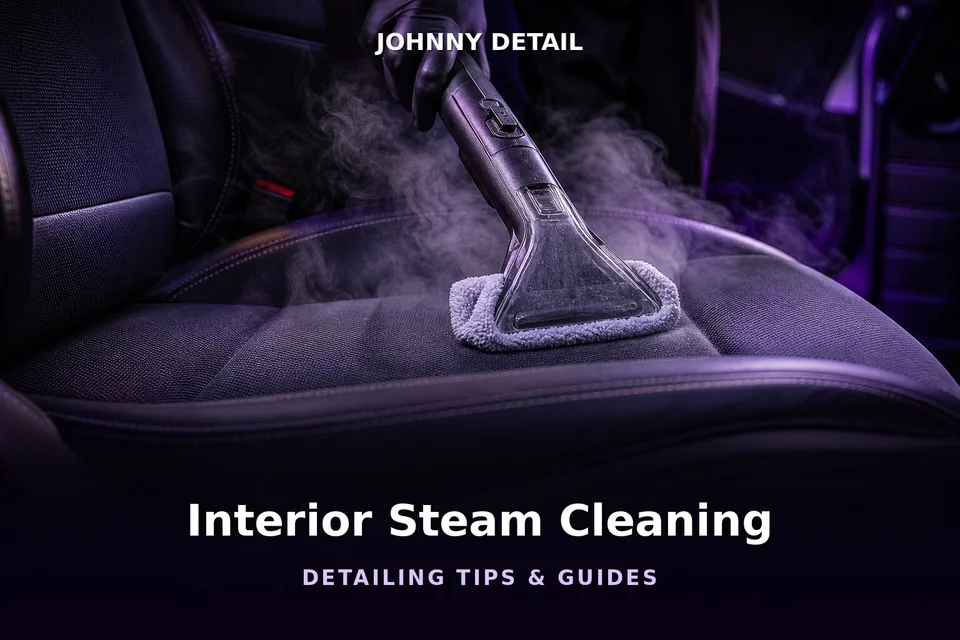
Steam can loosen certain grime and help clean crevices with limited liquid, but the tool still delivers heat and moisture. Use only attachments and settings allowed by the steamer manufacturer and the vehicle or material maker. Keep the nozzle moving as directed, avoid prolonged contact, and place a clean towel between the tool and a delicate surface when the approved method calls for it. Do not direct steam into switches, displays, electrical connectors, speaker openings, seat controls, airbag seams, or ventilation perforations.
Leather deserves particular caution. Much automotive leather has a protective surface coating, and aggressive heat or scrubbing can affect that coating before it affects the hide below. Steam should not be treated as a universal leather-cleaning shortcut. A compatible leather cleaner applied with a soft tool may provide more control. Uncoated, aniline, specialty, repaired, or vintage leather may require professional leather care. After any permitted cleaning, apply conditioner or protectant only if the leather and product manufacturers recommend it.
When extraction may help
Extraction combines solution delivery with recovery and is most often considered for compatible carpet and fabric upholstery. The goal is controlled soil removal, not saturation. Pre-vacuum thoroughly, use a product approved for the material and machine, and apply only the amount needed for the chosen process. Make deliberate recovery passes and monitor the fabric, seams, and backing. Excess moisture can migrate into foam, flooring, wiring, or adjacent materials even when the face fabric looks acceptable.
Take extra care around heated or ventilated seats, occupant sensors, wiring under seats, and floor-mounted electronics. The owner’s manual may identify areas that should not be wet-cleaned. If a spill has reached a module, connector, restraint component, or unknown cavity, disconnecting or servicing the system may require a qualified technician. Do not guess at airbag or battery procedures. Extraction also should not be used to spread contamination from one area to another; clean the recovery tank, hose, and attachments according to the equipment manual between jobs.
Combine methods only when there is a reason
A steamer and extractor can complement each other on some compatible fabrics, but using both is not inherently more thorough. Each additional step adds heat, moisture, and handling. Start with dry removal and the mildest suitable cleaner. Escalate only if the test area shows that the next method is useful and the surface is stable. Keep separate, clean attachments for different materials and tasks. A brush used on gritty carpet should not move directly to a leather bolster or glossy trim.
Drying is part of the cleaning process
Recover as much moisture as practical, blot accessible surfaces with clean towels, and provide ventilation and airflow. Keep doors or windows open only where weather and security allow, and protect the vehicle from new dust or rain. Do not close a damp cabin and assume it will finish drying on its own. Check thick bolsters, carpet padding, seams, and low areas rather than judging only the surface. Persistent dampness, odor, visible microbial growth, or water beneath the floor can require specialist remediation.
Maintain the equipment and the result
Empty and rinse recovery components as the machine manual directs, allow removable parts to dry, and use only approved water and descaling procedures. Inspect cords, hoses, seals, and attachments before storage. In the vehicle, address future spills promptly with a method suitable for the material, and avoid coating seats with products that leave an unsafe slick finish. For broader cabin care, see Johnny Detail’s auto detailing services and the auto detailing article collection. A professional detailer or upholstery technician is the better choice when the material is unknown, damaged, contaminated, or connected to safety systems.
Best Interior Steam Cleaning & Extractors for Leather Fabric Stains FAQ
- Is steam appropriate for every leather surface?
No. Vehicle upholstery may be coated, dyed, perforated, or repaired. Check the vehicle and material-care guidance, spot-test first, and avoid heat or moisture unless the method is supported.
- When is extraction useful on vehicle fabric?
Controlled extraction can help on compatible carpet and upholstery. Check care guidance first and avoid excess moisture around wiring, sensors, heated seats, and other electrical components.
- Can I use one attachment on leather and fabric?
Use clean attachments that both the equipment maker and surface-care guidance permit. A nozzle suitable for one material may be too abrasive or deliver too much moisture for another.
- How should an interior be dried after extraction?
Remove as much moisture as practical, provide ventilation and airflow, and keep the cabin open as conditions allow until materials are fully dry. Do not close up a damp interior.
- How should I maintain a steamer or extractor?
Follow the equipment manual for approved water, cleaning solutions, rinsing, and descaling. Never mix chemicals unless their labels explicitly allow it.
Manufacturer resources
Select the instructions matching your vehicle, material, and model year. These manufacturer resources provide care information for the brands and surfaces they cover.

Comments