
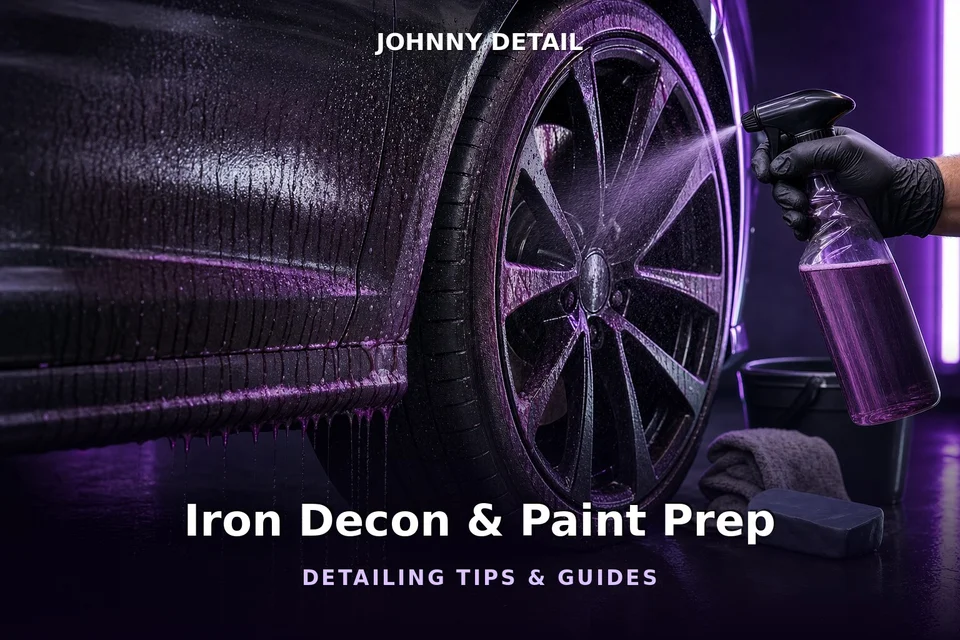
Decontamination begins after a careful wash
Paint decontamination is the removal of material that remains bonded to a vehicle after ordinary washing. Depending on where and how a vehicle is used, that material may include iron fallout, road film, tar, mineral deposits, tree residue, overspray, or other particles. These contaminants do not all respond to the same chemical or tool. A cautious practical approach is to identify the problem as closely as possible, confirm the paint or coating type, and begin with the least aggressive compatible method rather than treating every rough panel the same way.
Inspect before reaching for an iron remover
Wash and rinse the vehicle first so loose grit does not interfere with the assessment. On a clean, cool surface, inspect under useful lighting without rubbing bare fingers across dirty paint. Look for small colored specks, raised deposits, spotting, and differences between horizontal and vertical panels. A clean surface that still feels rough through a clean inspection medium may have bonded contamination, but texture alone does not prove iron is present. Paint overspray, sap, mineral scale, and damaged clear coat can create different kinds of roughness.
Check whether the vehicle has matte paint, a wrap, paint-protection film, a ceramic coating, fresh repair work, or delicate trim. The finish maker or installer may limit which chemicals and mechanical media can be used. Read the decontamination product label for surface exclusions, required protective equipment, ventilation, and disposal guidance. Test in an inconspicuous area, particularly on repainted panels, trim, wheels, and older finishes. Stop if the test produces staining, swelling, softening, unusual tackiness, or a change in gloss.
Using a chemical iron remover cautiously
An iron remover is formulated to react with certain ferrous contamination, but formulas vary in strength and approved uses. Use it only where its label permits, and do not assume a visible color reaction tells the whole story. The reaction can be affected by the product itself, the contamination, and residues already on the surface. Follow the maker’s directions for surface condition, application, dwell, agitation, and rinsing. Do not allow the product to dry unless the instructions explicitly describe that use, and keep it away from materials the label excludes.
Work in a location where runoff can be managed according to local requirements. Avoid mixing an iron remover with wheel acid, bleach, household cleaner, or another detailing chemical. Even products that are individually familiar may react unpredictably when combined. Rinse application tools before using them with a different product, and store chemicals in their original labeled containers. If there is uncertainty about ventilation, exposure, or disposal, consult the safety data sheet and the product manufacturer.
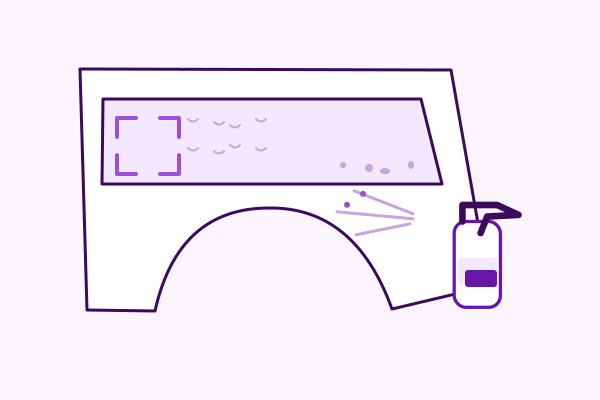
Mechanical decontamination is a separate decision
Clay bars, synthetic clay media, and related tools remove bonded material by contact. That contact can also mar paint, especially if the surface is dry, the media is contaminated, or too much force is used. After chemical treatment and a complete rinse, reassess the paint rather than automatically adding a clay step. If bonded contamination remains and the finish allows mechanical treatment, use compatible lubrication, inspect the media frequently, and test a small section. Discard a clay bar that has picked up damaging grit or fallen onto a dirty floor.
Mechanical decontamination does not replace washing, and it is not a correction process. It may leave fine marks that become more visible on dark or soft paint. Before proceeding, decide whether the owner accepts that possibility or whether professional assessment is preferable. Avoid aggressive rubbing over chips, lifted film edges, decals, matte finishes, or failing clear coat. On unusual or high-value finishes, a paint specialist can identify a lower-risk plan.
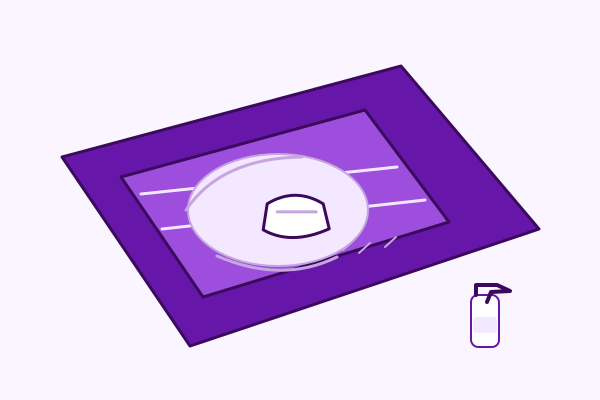
Decide whether polishing is actually needed
Polishing can reduce some visible defects, but it removes a small amount of surface material and should not be treated as an automatic follow-up. Inspect the decontaminated paint under appropriate lighting. If the finish meets the goal, cleaning and protecting it may be enough. If correction is desired, evaluate paint thickness and condition where appropriate, select the least aggressive pad and polish combination, and perform a test section. Deep scratches, peeling clear coat, exposed base coat, and uncertain repairs are not routine polishing problems.
Prepare for wax or sealant
Before applying protection, remove decontamination residue as the product directions require and make sure the surface is clean and dry. Some waxes and sealants tolerate certain preparation oils; others require a specific panel preparation step. Follow the protection maker’s instructions instead of using a universal solvent wipe. Keep towels, applicators, and pads separated by task so wheel or lower-panel contamination is not transferred back to clean paint.
Decontamination should be driven by observed condition and compatible product guidance, not by a fixed calendar. A vehicle stored indoors may face different contamination from one parked near rail lines, industrial fallout, construction, or coastal air. Regular gentle washing and inspection can help catch deposits before they become difficult to address. For the next step, see the wax versus sealant guide. Johnny Detail also outlines auto detailing and paint correction options for finishes that need closer evaluation.
Decontamination & Iron Removal: Essential Prep Before Wax/Sealant FAQ
- When might paint need decontamination?
After a thorough wash, a rough texture or visible bonded spots may indicate remaining contamination. Inspect in good light and begin with the least aggressive compatible method.
- Should iron remover come before a clay treatment?
If the label says the remover suits the finish, apply and rinse it exactly as directed, then reassess. Use clay only for remaining bonded contamination and with suitable lubrication to limit marring.
- Does decontamination always require polishing afterward?
No. Polishing removes some surface material and should be based on the finish condition and the owner’s goals. If correction is appropriate, test the least aggressive combination first.
- Can I apply wax or sealant immediately after decontamination?
Make sure the surface is clean and dry and that cleaner residue has been removed. Then follow the protection product’s preparation and cure instructions.
- How do I check whether a decontamination product is compatible?
Review the paint or coating maker’s guidance and the product label for finish limitations. Spot-test a hidden area and stop if you see staining, softening, or an unwanted texture change.
Manufacturer resources
Select the instructions matching your vehicle, material, and model year. These manufacturer resources provide care information for the brands and surfaces they cover.

Comments