
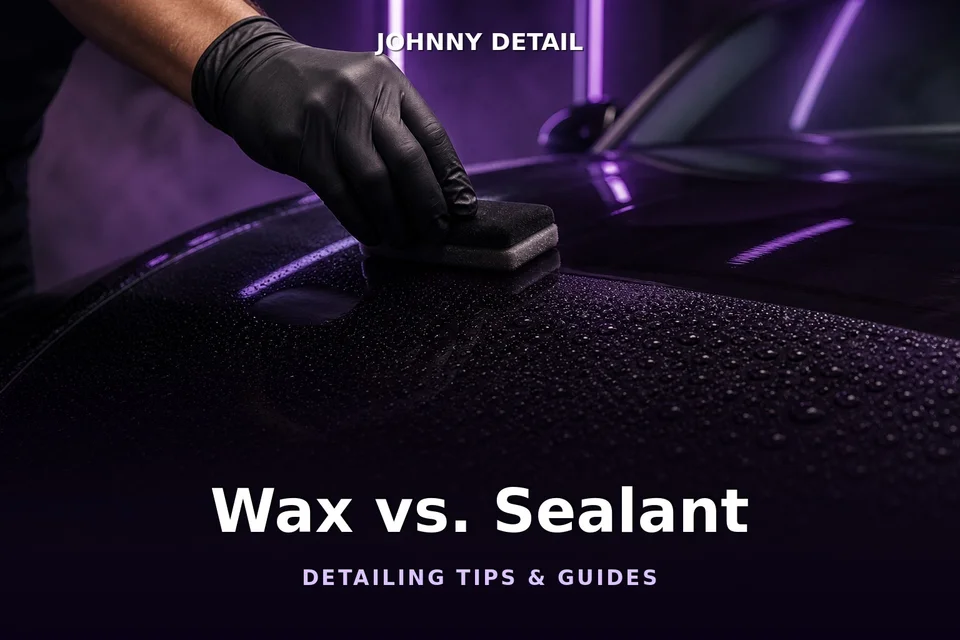
Wax and sealant serve different detailing goals
Wax and paint sealant are both surface-protection products, but the labels cover a wide range of formulas. The useful comparison is not simply natural versus synthetic or dark paint versus light paint. Start with the vehicle’s finish, its current condition, the look you prefer, and the maintenance you are willing to perform. Product compatibility and preparation usually matter more than the color named on the paint code. A careful choice can improve the appearance and make routine washing easier, but no product makes paint immune to scratches, weather, or neglect.
Inspect the finish before choosing protection
Wash the vehicle with products and methods appropriate for its existing paint or coating, then inspect it in diffuse light and stronger directional light. Look for bonded contamination, water spotting, oxidation, chips, clear-coat failure, and previous repair work. If the surface feels rough after washing, it may need decontamination before protection. If it has swirls or haze, decide whether correction is appropriate rather than expecting wax or sealant to remove defects. Repainted panels, matte finishes, satin finishes, wraps, and paint-protection film require specific guidance from the vehicle, installer, or material manufacturer.
What to expect from car wax
Wax is often chosen for its visual character and straightforward application, but its behavior depends on the complete formula rather than the word wax on the package. Some products emphasize a warm-looking finish, while others are designed for clarity or easy maintenance. Compare the label’s approved surfaces, preparation steps, use limitations, and maintenance products. A wax may temporarily make very fine defects less noticeable, but it does not repair them. Apply it only to compatible, clean paint, and test a small area if the finish has unusual texture, prior coatings, or uncertain history.
What to expect from paint sealant
Paint sealants are marketed as durable synthetic protection, yet their chemistry and directions differ. Some need a bare surface, while others are intended to work with a related polish or preparation spray. Some may be maintained with a companion product, and some should not be topped at all. Read the instructions as a complete system. Do not infer a cure period, layer order, or expected service life from another brand. Environmental exposure, washing technique, storage, surface preparation, and the condition of the paint can all affect how a sealant looks and behaves.

Dark, light, and metallic paint considerations
Paint color influences what the eye notices, not whether a formula is inherently compatible. Dark paint can make lint, streaks, high spots, and wash marring easier to see. Light paint may hide some fine marks while making tar, iron fallout, or staining more obvious. Metallic and pearl finishes can look different as lighting changes, so inspect from several angles. Use clean, soft applicators and towels, keep contaminated tools away from the paint, and avoid chasing a marketing claim that one product is universally best for a color family.
The underlying finish also matters. A glossy clear coat is different from factory matte paint, a vinyl wrap, or a ceramic-coated panel. A product that adds gloss or fills texture may be undesirable on a matte surface. If the vehicle has multiple materials, divide the work into sections and use a product approved for each one. Mask or carefully avoid trim when a label warns about staining. An inconspicuous test can reveal changes in gloss, color, slickness, or residue before the entire vehicle is treated.
Preparation and application
Good preparation begins with a thorough but gentle wash. Remove loose grit before touching the paint, use clean tools, and dry without dragging contamination across the surface. Address bonded deposits with a compatible chemical or mechanical process only when needed. If polishing is part of the plan, use the least aggressive combination that meets the goal and protect thin edges, decals, and sensitive trim. Panel temperature, ventilation, weather, and shade requirements should come from the product label rather than a generic detailing rule.
During application, work in manageable sections and use the specified amount. More product can make removal harder and may leave smearing without improving protection. Keep wax and sealant away from controls, friction surfaces, unfinished trim, glass, or rubber when the label excludes them. Use fresh towels for removal, turning them often. If the product smears, grabs, or changes the finish unexpectedly, stop and review the directions instead of adding another layer. Layer wax and sealant only when both manufacturers describe the products as compatible.
Maintain the finish by condition
Use compatible wash products and inspect the finish after cleaning. Changes in water behavior, gloss, slickness, or cleaning ease can help with assessment, but none is a perfect standalone test of remaining protection. Follow the maker’s maintenance guidance and account for how the vehicle is stored and used. Avoid unnecessary abrasive polishing at every refresh. If the paint is peeling, unusually soft, freshly refinished, or otherwise uncertain, consult the paint shop or a qualified detailer before proceeding.
For related preparation guidance, read the paint decontamination guide. Drivers comparing professional options can also review Johnny Detail’s auto detailing services and paint correction overview. These resources can help frame the decision, while the vehicle and product manufacturers remain the authority for a specific finish.
Wax vs Sealant: Ideal Finish for Dark, Light, Metallic Paints FAQ
- How should I choose between wax and paint sealant?
Consider the finish type, paint condition, desired appearance, and upkeep plan. Confirm that the product is labeled for the surface and follow its preparation and application directions.
- Does paint color determine which protection to use?
Color can affect how gloss and reflections look, but surface condition and product compatibility matter more. Test an inconspicuous area and assess the finish as the label directs.
- Can wax and sealant be layered?
Layer products only when their manufacturers describe them as compatible. Follow the specified order, surface preparation, and cure directions instead of assuming different systems will bond.
- What should I use on fresh, repainted, or matte paint?
Ask the paint shop or vehicle manufacturer what may be applied and when. Matte and satin finishes generally need products explicitly labeled for non-gloss surfaces.
- How can I tell when paint protection needs attention?
After a careful wash, note changes in water behavior, appearance, and cleaning ease, then compare them with the product maker’s maintenance guidance. No single observation proves that protection has failed.
Manufacturer resources
Select the instructions matching your vehicle, material, and model year. These manufacturer resources provide care information for the brands and surfaces they cover.

Comments