
UV protectant selection starts with the plastic
ATV fenders face sunlight, mud, branches, washing, abrasion, and flexing, but a bottle labeled UV protectant cannot correct every kind of wear. Plastic type, molded texture, paint, graphics, prior dressing, and repair history affect what can be applied. Check the ATV and product manufacturer’s guidance before treating a panel. The most useful product is one explicitly approved for the confirmed surface, produces an acceptable finish, and can be maintained without making controls or contact areas slippery.
Identify fading, residue, and physical damage
Wash a small area gently and inspect it after drying. Dullness may come from soil, mineral residue, oxidized dressing, surface abrasion, stress whitening, or actual color change in the plastic. Cracks near fasteners, deep gouges, distorted panels, and brittle edges are physical damage that a protectant will not restore. Graphics may have their own laminate or adhesive limitations. If a panel is painted or wrapped, use the care guidance for that finish rather than treating it as bare plastic.
Look for previous products that leave a greasy film or uneven gloss. Layering an unfamiliar protectant over old residue can create streaking or interfere with adhesion. Use only a preparation cleaner permitted by both systems, and avoid aggressive solvents or abrasives. Sanding is not a routine preparation step for a dressing or protectant; it can permanently change molded texture and thin a painted or coated surface. Reserve repair and refinishing procedures for instructions specific to that system.
Compare products by label, not invented rankings
Terms such as marine grade, nano, ceramic, UV block, or professional do not by themselves establish suitability or performance. Compare approved materials, finish level, application method, cure guidance, maintenance products, safety data, and surface exclusions. Be skeptical of a universal durability claim that does not account for storage, washing, abrasion, or climate. If independent testing matters to the decision, look for clearly identified methods and standards from the manufacturer or a credible testing body rather than anonymous percentages or simulated results.
A water-based dressing, solvent-based protectant, coating, or manufacturer-specific product may behave differently on textured plastic. Some darken the surface or add gloss; others aim for a more natural appearance. Neither is inherently correct for every ATV. Consider whether the product could transfer to clothing, collect dust, become slick when wet, or leave visible high spots. The label should also address whether it can be used near fuel, heat, electrical switches, and graphics.
Clean and test before full application
Allow the ATV to cool, stabilize it according to the owner’s manual, and work in suitable ventilation. Remove loose grit before contact washing. Use a cleaner compatible with the fender and rinse or wipe it away as directed. Dry the panel fully unless the protectant instructions specify otherwise. Do not mix cleaners or apply protectant over an unknown chemical residue.
Choose an inconspicuous test area that includes the same texture and finish as the visible panel. Apply the product exactly as directed, including any wipe-off and cure steps. Evaluate color, gloss, tackiness, streaking, and surface feel after the test has completed the stated process. A fingertip dry test alone may not confirm cure. If the result is patchy or slippery, stop and contact the product maker before trying to correct the entire fender.
Apply with control
When the test is acceptable, work in manageable sections with clean applicators. Apply only the amount specified and level or remove excess as directed. More product does not necessarily provide more protection and may leave residue in textured areas. Keep the treatment away from the fuel opening, seat, grips, levers, footwells, brake components, tires, exhaust, and any surface where secure contact matters. Applying to an applicator instead of spraying broadly can reduce overspray when the label permits it.
Respect the product’s environmental and cure directions without substituting generic temperature or timing rules. Protect the surface from dust, water, and contact for as long as the maker specifies. Reinstall any removed panels using the ATV service information, and confirm that fasteners, clips, labels, and controls remain secure before operation.
Maintain by use and condition
Wash treated fenders with compatible products and gentle tools. Aggressive scrubbing, trail abrasion, and strong cleaner can change performance even when a coating still looks present. Inspect for uneven wear, residue, cracking, and loose graphics. Reapply only under the manufacturer’s maintenance guidance and after suitable cleaning. Do not keep adding layers to hide damage or discoloration. A plastic-repair or refinishing professional can assess panels with structural cracks, failed paint, or extensive stress whitening.
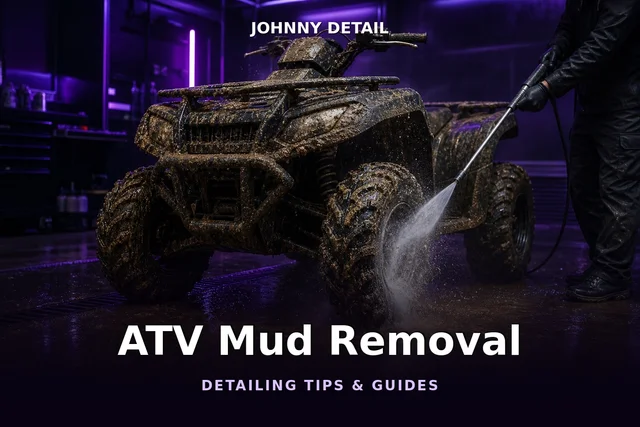
Shade and sensible storage can reduce exposure alongside a compatible protectant. Use a cover approved for the ATV, ensure the machine is dry, and avoid trapping grit that can rub the fenders. For more exterior care, read the ATV mud-removal guide or review Johnny Detail’s ATV detailing services and ATV detailing articles.
Best UV Protectants for ATV Plastic Fender Durability FAQ
- How do I choose a protectant for an ATV fender?
Identify the plastic and finish where possible, then choose a product whose label covers that surface and outdoor vehicle use. Spot-test for color, gloss, and texture changes.
- Can the same protectant be used on every plastic part?
Not automatically. Follow the label for each material and keep the product away from fuel openings, controls, seats, grips, brakes, tires, and hot components unless explicitly permitted.
- Will a UV protectant change the fender’s appearance?
It may alter gloss, color depth, or surface feel. Test a hidden area, allow it to dry as directed, and confirm the result is acceptable before treating the full panel.
- Should I sand an ATV fender before applying protectant?
Do not sand for routine protectant application unless the plastic or coating system’s instructions specifically require surface alteration. Sanding can permanently change texture and appearance.
- When should UV protectant be reapplied?
Use the product maker’s interval and consider exposure, washing, and visible condition. A dry-to-touch surface alone does not replace the stated cure and maintenance directions.
Manufacturer resources
Select the instructions matching your vehicle, material, and model year. These manufacturer resources provide care information for the brands and surfaces they cover.

Comments