
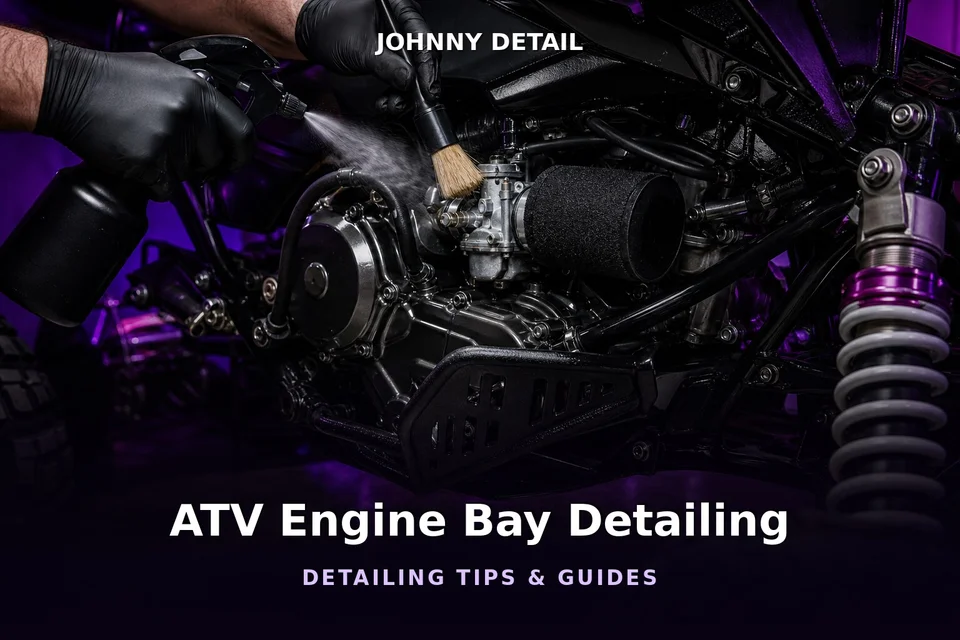
Engine-bay cleaning is not engine service
An ATV engine area brings together painted and bare metal, plastic, rubber, wiring, connectors, fuel components, filters, seals, and hot exhaust parts. A degreaser that works on an exterior cover may damage a foam filter or carry contamination into a carburetor. Treat detailing and mechanical service as separate tasks. Use the owner’s and service manuals to identify components, and stop when access, disassembly, or symptoms move the job beyond surface cleaning.
Inspect the machine while it is dry
Let the ATV cool completely, park it securely, and remove the key where the manual recommends. Before adding cleaner or water, look for leaking fuel or oil, cracked hoses, damaged wiring, loose boots, missing caps, open vents, and evidence that dirt has passed the air filter. Photograph hose and cable routing if an approved panel must be removed. Do not wash away a leak before its source is understood. Fuel odor, wet electrical damage, or a running problem calls for a qualified technician.
Use a brush or vacuum method permitted for loose dry debris, taking care not to push grit into intakes, connectors, or cooling passages. Check whether the owner’s manual allows water in the engine compartment and which areas must remain dry. Do not assume that covering a component with plastic makes pressure washing acceptable. Tape and bags can move or trap moisture, and they do not replace model-specific guidance.
Select degreaser by surface and soil
Read the degreaser label for approved metals, plastics, coatings, rubber, and electrical use. Stronger is not automatically better. An alkaline cleaner, solvent-based product, citrus cleaner, or water-based formula can affect materials differently. Test an inconspicuous area and watch for whitening, staining, swelling, softening, or lifted paint. Use ventilation and personal protective equipment specified by the label and safety data sheet.
Do not mix cleaners, use them in unlabeled containers, or reuse dirty solution on another component. Contaminated liquid can carry grit and oil to a clean surface. Follow the product’s disposal requirements and local rules. If a cleaner reaches soil or a drain, manage the runoff appropriately rather than relying on broad biodegradable or eco-friendly marketing language.
Air filters need their own maintenance system
Foam, paper, and oiled-cotton filters are serviced differently. Identify the exact filter and follow its manufacturer’s cleaning, drying, oiling, and replacement instructions. A cleaner that is mild on engine covers may degrade filter foam, adhesive, or fibers. Paper elements are often inspected or replaced rather than washed, but the filter maker’s instructions decide the process. Do not apply generic engine degreaser to a filter or improvise a re-oiling product.
Keep the clean side of the intake protected as the service manual describes. Inspect sealing surfaces and the airbox for dirt tracks or damage. If contamination has passed the filter, or the element is torn, deformed, or separating, further diagnosis may be needed. Reinstall the filter only when the specified process is complete and all seals, cages, clips, and covers are correctly positioned.

Protect carburetor and fuel-system openings
Exterior carburetor cleaning should be controlled and limited to approved surfaces. Avoid directing pressurized water, solvent, or debris into vents, linkages, electrical parts, fuel openings, or intake passages. Do not adjust screws, disconnect lines, or remove the carburetor based on a detailing tutorial. Internal deposits, poor throttle response, hard starting, leaks, and fuel-system contamination are mechanical problems that require the correct service procedure.
If disassembly is authorized and within the operator’s skill, use the model-specific manual, correct tools, clean work practices, and replacement parts specified by the manufacturer. Otherwise, leave the work to a qualified ATV technician. Gasket or thread sealant should be used only where the manual identifies the exact product and application. Extra sealant can obstruct passages or interfere with assembly; it is not insurance against leaks.

Clean accessible surfaces with control
Apply cleaner to a brush or towel when that reduces overspray and the label permits it. Work in small areas, agitate gently, and remove residue before it migrates. Use a controlled rinse only where approved. Avoid forcing water into bearings, seals, connectors, ignition components, the intake, or exhaust. Keep tools used on chain grease and the undercarriage separate from those used near openings and clean painted surfaces.
Dry accessible surfaces with clean towels and ventilation. Use compressed air only if the equipment and ATV instructions allow it, and avoid driving moisture or grit into connectors. Reinstall panels and components according to the manual. Before starting the engine, account for every tool, towel, cap, connector, fastener, and protective covering. If there is uncertainty about reassembly, do not run the machine.
Inspect after cleaning
A clean engine area makes seepage, corrosion, loose hardware, and damaged insulation easier to see. Address those findings before riding. Do not add a glossy dressing where it could attract dust, soften rubber, contact hot components, or conceal a leak. Any corrosion inhibitor or protectant should be approved for the exact material and kept away from brakes, controls, filters, electrical contacts, belts, and exhaust parts.
For related exterior work, review the ATV mud-removal guide. Johnny Detail also provides an overview of ATV detailing services and maintains an ATV detailing article collection. Mechanical symptoms, damaged components, or uncertain disassembly belong with a qualified service technician.
Engine Bay Detailing: Safe ATV Degreasers for Filters & Carburetors FAQ
- What cleaner should I use on an ATV air filter?
Identify the filter type and follow its maker’s cleaning and re-oiling instructions. Foam, paper, and oiled-cotton filters are not maintained the same way, so use the specified system.
- Should I pressure-wash a carburetor or fuel-system parts?
Avoid directing pressurized water into carburetor openings, vents, connectors, or seals. Follow the service manual, and leave internal fuel-system work to a qualified technician if uncertain.
- Can degreaser solution be reused on several components?
Do not reuse contaminated solution or assume one formula suits every material. Follow disposal directions, keep products in labeled containers, and never mix cleaners unless explicitly allowed.
- When should carburetor disassembly be left to a technician?
If the service manual calls for procedures or tools you do not have, or the ATV has leaks or running problems, stop cleaning and use a qualified repair technician.
- Do I need to re‑apply sealant after cleaning?
Apply gasket or thread sealant only where the service manual specifies the exact type and procedure. Extra or incompatible sealant can interfere with reassembly and should not be improvised.
Manufacturer resources
Select the instructions matching your vehicle, material, and model year. These manufacturer resources provide care information for the brands and surfaces they cover.


Comments