
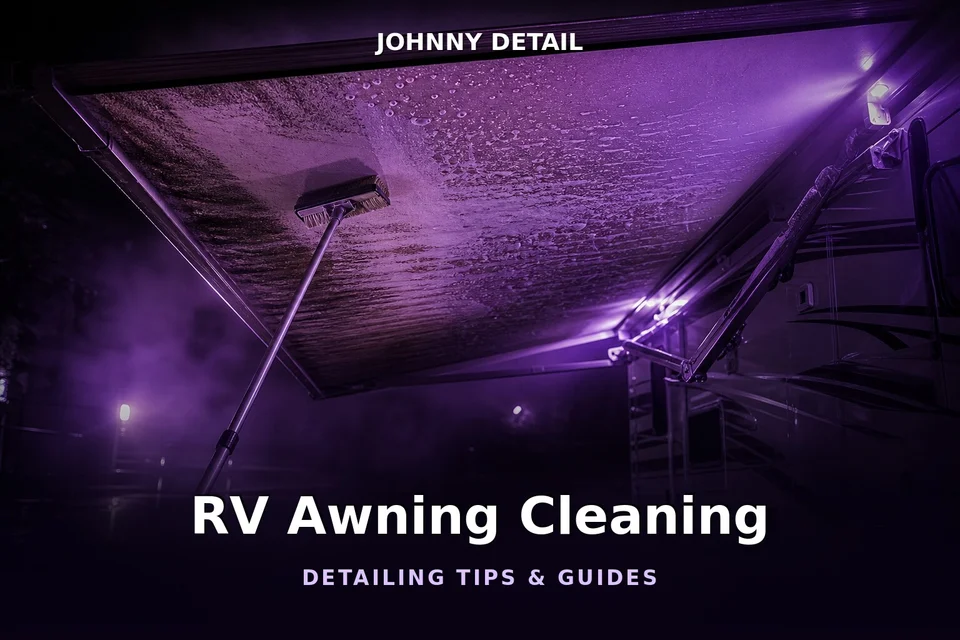
Identify the awning fabric and mechanism
RV awnings can use vinyl, woven acrylic, or another coated fabric, and the assembly may include clear panels, thread, adhesive, aluminum, plastic end caps, springs, sensors, and a powered or manual roller. Cleaning directions vary with both fabric and hardware. Locate the RV and awning manufacturer’s care documents before selecting a chemical or deploying the unit. If labels are missing or replacement fabric has been installed, ask the supplier or an RV awning specialist to identify it.
Deploy and inspect under controlled conditions
Extend the awning only as the operating manual allows and only when weather and site conditions make it stable. Secure or support it according to the manufacturer; do not improvise around spring tension or powered arms. Turn off or isolate power only under the documented service procedure. Inspect arms, brackets, wiring, end caps, seams, hems, roller attachment, and fabric edges. Bent hardware, unusual motor behavior, loose mounts, or torn attachment points require service before washing.
Look at both sides of the fabric for loose debris, mildew-like spotting, leaf stains, sap, insect residue, rust transfer, coating wear, and delamination. A dark mark is not automatically mold, and a stain may remain after contamination is removed. Check nearby roof drainage and seals because recurring moisture can be caused by a leak or storage condition that cleaning alone cannot solve.
Remove dry debris gently
Brush or vacuum loose material with a soft, clean tool approved for the awning. Support the fabric so it is not stretched or scraped across the roller. Keep gritty brushes away from clear panels and the RV wall. Clean gutters and drainage paths under the RV maker’s guidance so debris does not wash back onto the fabric. If nests or animal waste are present, follow appropriate health precautions or call a specialist.
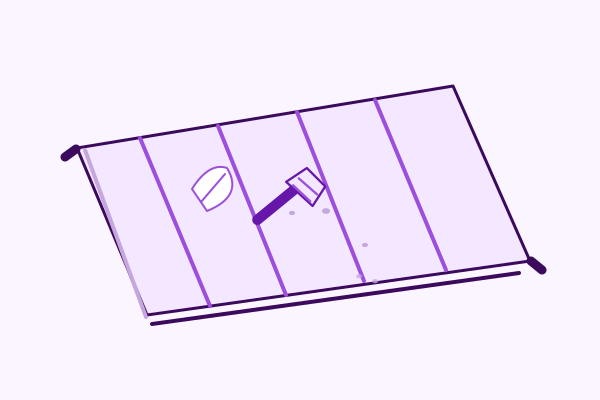
Select cleaner by fabric, not by stain alone
Choose a cleaner whose label covers the exact awning material, coating, thread, and adjacent surfaces. Review ventilation, personal-protection, runoff, rinse, and disposal directions. A household product can leave residue or affect water repellency. Use bleach only if the awning manufacturer explicitly permits the exact product and method. Never mix bleach with other cleaners or apply it over an unknown chemical residue.
Spot-test the full process and let the test area dry before judging it. Apply cleaner in manageable sections and agitate with a soft tool as directed. Avoid high-pressure washing unless the awning maker authorizes it; concentrated force can drive water into seams, separate coating layers, or damage fabric. There is no universal safe pressure for every awning. Rinse gently and thoroughly so cleaner is not rolled into the assembly.
Address mildew and its moisture source
A compatible treatment may remove surface growth and residue, but it cannot guarantee that every stain disappears or that mildew will not return. Avoid homemade peroxide, bleach, vinegar, or biocide recipes. Use only a product approved by the fabric maker and follow its label. If growth is widespread, returns quickly, or appears within laminated layers, insulation, or the RV interior, consult a remediation or awning professional.
Correct storage and moisture conditions. Check for roof runoff, a wet storage cover, poor ventilation, and damp items contacting the rolled awning. Do not routinely retract it wet. If weather requires temporary retraction, extend and dry it promptly when conditions and the operating manual allow. Also clean and dry any protective cover or valance that can reintroduce contamination.
Dry completely and inspect again
Allow airflow across both sides while the awning remains safely supported. Do not use unapproved high heat to speed drying. Check seams, hems, and the roller area rather than judging only the exposed center. After drying, look for color change, stiffness, tackiness, lifted coating, weakened thread, and residue. If the surface changed unexpectedly, stop before applying protectant and contact the fabric or cleaner manufacturer.
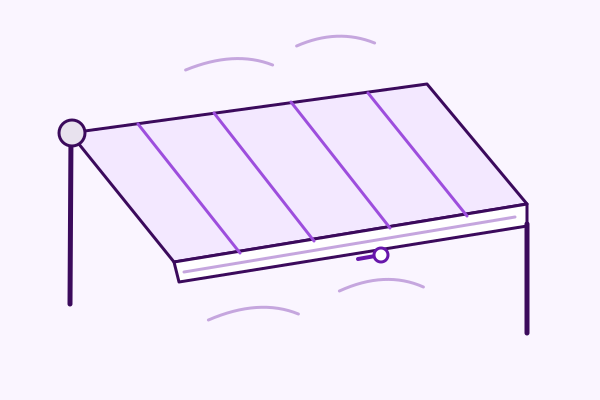
Use protectant only when specified
Some awning fabrics have a factory treatment that can be renewed with a compatible product; others require different care. Choose a treatment recommended for the material and keep it off windows, paint, seals, and hardware unless the label permits them. Apply under the stated environmental and cure conditions without substituting generic timing or coat rules. More product can lead to streaking or stiffness rather than longer service.
Store and maintain by condition
Retract the dry awning according to the operating manual, confirm travel locks or powered controls are correctly set, and inspect it periodically during storage. Clean when visible soil or the manufacturer’s guidance calls for it instead of following an invented seasonal schedule. Have tears, failed seams, delamination, spring or motor problems, and bent hardware repaired by a qualified awning technician.
Johnny Detail’s RV detailing services and RV detailing articles provide broader care context. The RV fiberglass guide covers exterior panels, while the boat bimini guide explains similar fabric-identification principles in a marine setting.
RV Awning Cleaning: Eliminate Mold & Extend Fabric Life FAQ
- How do I identify an RV awning’s material?
Use the RV or awning maker’s documentation to confirm the fabric, coating, stitching, and clear-panel materials. Care methods for vinyl and woven acrylic are not interchangeable.
- Can bleach be used on an RV awning?
Only use it when the awning maker explicitly permits the exact product and process. Never mix it with other cleaners, and follow label precautions, rinsing, and disposal directions.
- Can I use a pressure washer on the awning?
Avoid pressure washing unless the awning maker authorizes it. Controlled hand cleaning and gentle rinsing reduce the chance of forcing water into seams or damaging a surface coating.
- Must an awning be dry before it is retracted?
Dry it completely before storage whenever possible. If weather requires temporary retraction while damp, extend and dry it promptly when conditions and the operating instructions allow.
- When should an awning be professionally serviced?
Tears, failed seams, delamination, persistent mildew, bent hardware, or unreliable powered operation merit assessment by an awning or RV service professional.
Manufacturer resources
Select the instructions matching your vehicle, material, and model year. These manufacturer resources provide care information for the brands and surfaces they cover.

Comments