
Use the RV’s plumbing guidance as the primary source
Black-tank care involves wastewater, chemicals, seals, vents, sensors, and dump-site rules, so a general maintenance hack can create more trouble than it solves. Identify the RV, tank, toilet, valve, and treatment-system manufacturers, then follow their current instructions. Materials and plumbing layouts vary, and a chemical or lubricant suitable for one system may affect another. If documentation is missing, contact the manufacturer or an RV service professional before mixing products or disassembling a valve.
Start with hygiene and a controlled work area
Use an approved dump station and follow its posted procedures. Wear the protective equipment specified by the RV and chemical makers, keep clean-water equipment separate from waste-handling equipment, and prevent children or pets from entering the area. Do not connect a hose used for wastewater tasks to a potable-water system unless the equipment and site procedure specifically protect against cross-contamination. Wash hands and disinfect tools under product and public-health guidance after the job.
Inspect the exposed plumbing before operating a valve. Look for cracks, bulging, wet fittings, loose supports, damaged caps, and evidence of leakage. If waste is escaping or a tank appears structurally damaged, stop using the system, contain exposure as safely as possible, and arrange qualified service. Do not tighten, drill, glue, or patch a loaded tank based on a generic tutorial.
Diagnose odor instead of masking it
Odor can come from residue, a blocked or damaged roof vent, a dry toilet seal, a failed vacuum breaker, a loose fitting, leakage, or another plumbing problem. Adding fragrance does not identify the source. Check the owner’s manual for the vent path, toilet seal care, water-use guidance, and troubleshooting sequence. Roof inspection requires safe access and may be better handled by an RV technician.
Persistent odor inside the RV deserves prompt investigation, especially if it appears near a cabinet, floor penetration, or plumbing connection. Ventilation can reduce exposure while troubleshooting, but do not use fans or ignition sources contrary to the chemical or RV instructions. If the source is uncertain, the system is obstructed, or anyone feels unwell, leave the area and seek professional assistance.

Choose tank treatments carefully
Use a treatment only when it is compatible with the tank, seals, sensors, toilet, and intended disposal system. Campgrounds and septic facilities may restrict certain chemicals. Read the entire label for dose, water requirements, ventilation, storage, and disposal; do not convert the directions into a homemade ratio. Claims such as enzyme, bio-active, natural, or odor control do not replace compatibility information.
Never mix bleach, acids, ammonia, toilet chemicals, enzyme treatments, or household cleaners unless the manufacturers explicitly describe the combination. Mixing can release harmful vapors, damage seals, or interfere with treatment. Do not add baking soda, vinegar, lemon juice, detergent, ice, or another household material as a routine hack without written system guidance. Keep products in their original labeled containers and prevent spills during travel.
Dump and rinse according to the system
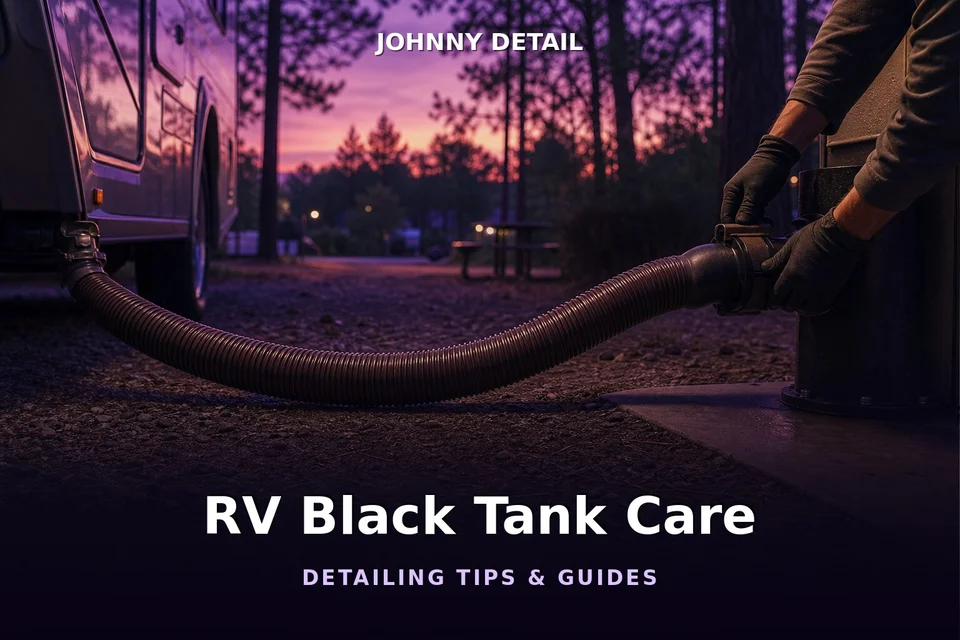
Follow the RV and dump-station sequence for connecting the sewer hose, opening valves, rinsing, disconnecting, and securing caps. Use only built-in flush equipment or rinsing tools approved for the tank. A pressure wand or improvised hose can damage sensors or create exposure. Never leave a black-tank valve open during ordinary use unless the RV manufacturer specifically calls for that configuration, because water and solids behavior depends on the system design.
If tank sensors report inconsistently, residue may be one cause, but wiring, probes, or the monitor panel also can fail. Use the manufacturer’s troubleshooting method rather than adding stronger chemistry. A technician can inspect a persistent sensor issue without risking damage to the tank or electrical system.
Care for dump valves and seals
A valve that is hard to operate may have dry seals, debris, cable problems, misalignment, swelling, or physical damage. Do not force the handle. Inspect accessible parts under the service manual and use only the seal-compatible lubricant specified for the exact valve and application point. A silicone label alone does not establish compatibility. Avoid petroleum products or improvised sprays unless the valve maker approves them.
If lubrication does not restore normal operation, or the valve leaks, arrange service. Removing a valve can release waste and may require the tank to be safely emptied, flushed, and supported. Replacement seals and fasteners should match the valve system. Do not apply epoxy or excess sealant around a crack or moving valve as a substitute for structural repair.

Sanitize and prepare for storage by the manual
Sanitation procedures, storage water level, antifreeze use, and winterization depend on the RV and climate. Follow the documented system and the exact chemical label. Do not use a universal bleach concentration or calendar. Rinse as required and confirm that valves, caps, and vents are in the storage configuration specified by the manufacturer. Protect the system from freezing only with approved methods and products.
Keep a simple condition-based record
Record products used, valve behavior, odor symptoms, repairs, and storage steps. Inspect during normal trips and before storage for leaks, damaged supports, or changed operation. A qualified RV technician should handle structural damage, persistent blockage, leaks, stuck valves, vent problems, and uncertain chemical exposure. Johnny Detail’s RV detailing services and RV article collection provide exterior and cabin-care context, while wastewater repair remains a plumbing service task.
RV Black Tank Maintenance: Odor Control & Valve Lubrication Hacks FAQ
- What treatment should I use in an RV black tank?
Follow the RV and tank makers’ instructions and choose a product compatible with the plumbing materials and disposal system. Observe campground or septic-system restrictions where applicable.
- Can household chemicals be used to sanitize the tank?
Use a chemical only when the RV manual and its label support that use. Never mix tank chemicals, and follow the exact dilution, ventilation, protective-equipment, and disposal directions provided.
- How should a sticky dump valve be lubricated?
Use only a seal-compatible product and application point specified by the valve or RV maker. Inspect for damage and do not force a valve that remains difficult to operate.
- What can cause persistent black-tank odor?
Possible causes include vent blockage, dry or damaged seals, residue, a leak, or another plumbing fault. Diagnose the source instead of masking it, and seek service if it is not clear.
- When does a black tank need professional inspection?
Stop using the system and seek qualified service for leaks, cracks, bulging, a stuck valve, damaged fittings, or suspected exposure to waste. Do not improvise a structural patch.
Manufacturer resources
Select the instructions matching your vehicle, material, and model year. These manufacturer resources provide care information for the brands and surfaces they cover.

Comments