
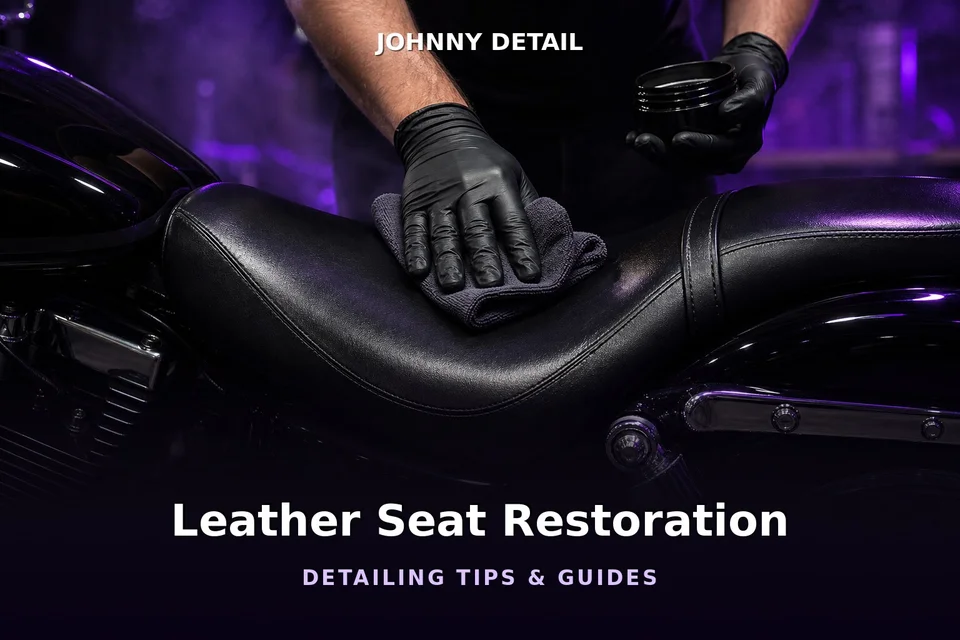
Begin by confirming what the seat is made from
Many motorcycle seats described casually as leather are actually coated leather, synthetic leather, marine-style vinyl, or a combination of materials. Decorative panels, piping, thread, foam, adhesives, and replacement covers may all respond differently to cleaners and conditioners. Check the motorcycle documentation, seat maker, upholstery invoice, or material label before choosing a product. If the material cannot be verified, begin with a cautious hidden-area test or consult an upholstery specialist rather than assuming that a leather-care routine is appropriate.
Separate cleaning, conditioning, and repair
Cleaning removes soil from a stable surface. Conditioning or protecting adds a compatible treatment when the material maker recommends one. Restoration may involve color repair, coating replacement, stitching, foam work, or a new cover. These are different tasks. A conditioner cannot rebuild cracked material, repair torn seams, replace missing coating, or correct a seat pan problem. Marketing terms such as nourishing, restoring, or UV protection should be evaluated against the product label and the seat manufacturer’s instructions.
Inspect before adding moisture
Look for open seams, lifted piping, worn coating, color transfer, hardened areas, mold, mildew, embedded grit, and previous repairs. Check whether the seat is heated, has electrical connections, or has openings that allow liquid to reach the foam. Remove loose dust with a clean, soft tool before wet cleaning. If the seat has structural damage, persistent microbial growth, a strong unknown odor, or saturated foam, stop and ask a motorcycle upholstery professional to inspect it.
Work only when the motorcycle is stable and the seat or surrounding components are cool. Read the cleaner label for compatible materials, ventilation, protective equipment, and surface preparation. Do not mix cleaning chemicals or transfer them into unlabeled containers. Test the full process in an inconspicuous area, including drying and any follow-up protectant, because a wet surface can temporarily conceal changes in color or gloss.
Clean with control
Apply a small, manageable amount of compatible cleaner to the applicator when that offers better control than spraying the seat. Use gentle agitation and keep residue away from controls, paint, clear instrument lenses, and the riding surfaces of tires or foot controls. Avoid flooding perforations and seams. Wipe away suspended soil with a clean towel, changing towel faces so dirt is not rubbed back into the material. Repeat only if the surface remains stable and the product directions support another pass.
Steam and strong solvents are not universal leather treatments. Heat, moisture, or aggressive chemistry can affect surface coatings, dyes, adhesives, and foam. Household oils can darken material, attract dirt, or leave the seat slippery. Use a method supported by the exact material. Suede, nubuck, aniline leather, vintage upholstery, and specialty finishes often need professional processes that differ from ordinary coated motorcycle seats.

Condition only when the material calls for it
Some coated leather and vinyl seats do not absorb traditional conditioners in the way owners expect. A product may remain on top of the coating and change gloss or traction. If the material maker recommends conditioning, choose a labeled product, apply it sparingly as directed, and remove excess. The finished riding surface should not feel greasy, tacky, or insecure. Stop using any treatment that transfers color, softens a coating, or makes the rider slide.
Allow a cleaned seat to dry according to the product and seat guidance before deciding whether further treatment is needed. After rain or washing, blot moisture and provide airflow instead of sealing a damp seat under a cover. Do not use heat as a shortcut unless the material maker approves the method. Inspect seams and the underside where accessible, especially if water may have entered the foam.
Reduce sun and weather exposure
A compatible protectant may be one part of an exposure plan, but it does not replace shade, sensible storage, and a cover designed for the motorcycle. Clean and dry the seat before covering it, choose a breathable and well-fitted cover, and follow the motorcycle maker’s storage guidance. Avoid trapping moisture or allowing a rough cover to rub grit across the upholstery. When parked outdoors, consider how sun, rain, tree residue, and nearby sprinklers affect the entire motorcycle rather than relying on a spray alone.

Know when restoration needs a specialist
Cracks that open under light flexing, peeling coatings, failed stitching, exposed foam, persistent dye transfer, and loose mounting points are signs that surface care is no longer enough. An upholstery professional can identify whether cleaning, recoloring, coating repair, panel replacement, or a full cover is appropriate. If the seat shape or attachment affects rider control, resolve the mechanical or upholstery problem before riding.
Maintain the seat by observed condition and maker guidance, not by a fixed conditioning schedule. Use clean riding gear, wipe away fresh contamination with a compatible method, and inspect after storage or severe weather. Johnny Detail’s motorcycle detailing services cover broader appearance care, while the motorcycle detailing collection includes related wheel and metal-finish topics. Material-specific instructions should remain the deciding authority for every cleaner and protectant.
Motorcycle Leather Seat Restoration: UV Protection & Conditioning Guide FAQ
- How do I know whether a motorcycle seat is leather?
Check the owner information or seat maker’s specifications before choosing a product. Coated leather, synthetic leather, and vinyl can require different cleaners and protectants.
- Can one product condition the seat and provide UV protection?
Only if its label covers the exact seat material and both uses. Spot-test first, follow the application directions, and remove residue that could leave the riding surface slick.
- Should I condition a seat while it is wet?
Follow the product label, which commonly calls for a clean, dry surface. After rain, blot and air-dry the seat, then inspect it before deciding whether any treatment is needed.
- How can storage reduce weather exposure?
Use shade or a compatible, breathable cover and avoid trapping moisture against the seat. Make sure the seat is clean and dry before covering the motorcycle.
- Can conditioner repair cracks or color loss?
Conditioner cannot reverse structural cracks, failed coatings, torn seams, or missing color. An upholstery specialist can assess whether repair or replacement is appropriate.
Manufacturer resources
Select the instructions matching your vehicle, material, and model year. These manufacturer resources provide care information for the brands and surfaces they cover.

Comments