
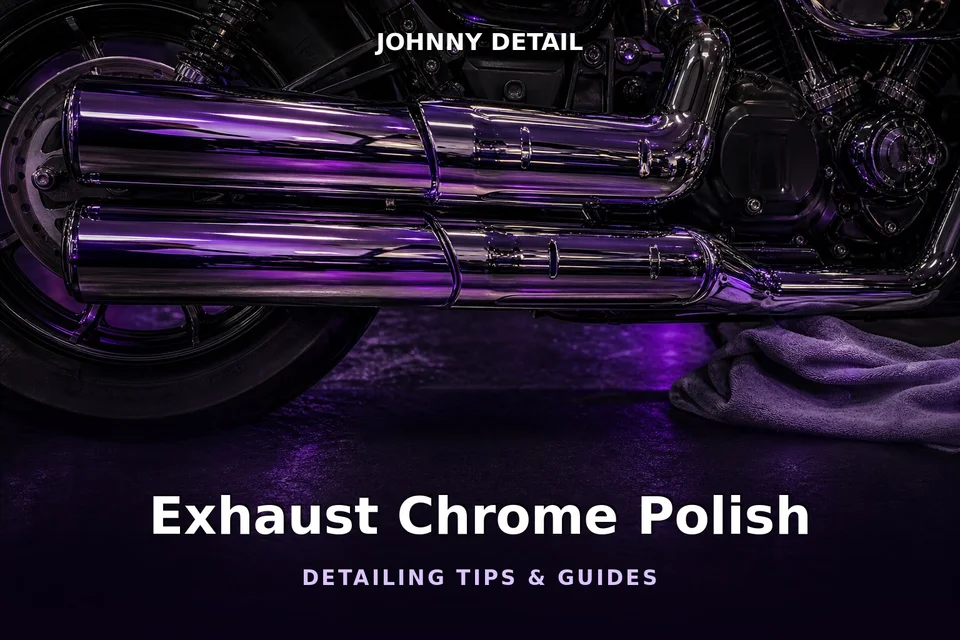
Confirm the heat shield finish before polishing
A bright motorcycle heat shield may be chrome plated, polished stainless steel, brushed metal, painted, ceramic coated, or finished with another decorative system. Those surfaces do not share one polishing method. Check the owner’s manual, parts catalog, or component manufacturer before choosing a cleaner or abrasive. If the finish is unknown, peeling, blue from heat, deeply pitted, or previously repaired, a hidden-area test or professional inspection is more useful than a stronger polish.
Let the motorcycle cool and stabilize it
Exhaust parts can remain hot after the engine is shut down. Begin only when the engine and exhaust are fully cool to the touch under the manufacturer’s service guidance. Park the motorcycle on a stable surface, secure it as the owner’s manual describes, and keep ignition sources away from cleaning chemicals. Inspect the shield, mounts, fasteners, nearby wiring, oxygen-sensor leads, and exhaust joints. A loose shield, exhaust leak, cracked mount, or damaged wire is a service issue, not a detailing defect.
Decide whether the shield should remain installed. Removal may improve access, but it can also involve hot-side fasteners, gaskets, alignment, or model-specific torque procedures. Do not remove it without the correct service information and tools. If it stays on the motorcycle, protect adjacent paint, plastic, rubber, and matte surfaces from accidental contact with metal polish. Use masking only where the tape and nearby finish are compatible, and avoid trapping abrasive residue in seams.
Clean before using an abrasive
Loose grit, road film, insect residue, tar, and oily deposits should be removed before polishing. Use a cleaner labeled for the confirmed finish and follow its surface-condition, ventilation, and rinse directions. Apply with a clean, soft tool and avoid saturating exhaust openings or electrical connections. Dry and inspect the shield after cleaning. What first looked like oxidation may be residue, mineral spotting, burned contamination, damaged plating, or heat discoloration that polishing cannot safely remove.
Do not assume a household metal cleaner or general car polish is suitable. A product intended for bare stainless steel may be too aggressive for thin chrome plating, while a chrome product may alter a brushed texture. Avoid combining cleaners, acids, solvents, and polishes. Review the safety data sheet when the label calls for special ventilation or protective equipment, and keep products in their original containers.
Use the least aggressive polishing method
For a compatible finish, begin with a small amount of the mildest suitable polish on a clean applicator. Test in a hidden area and inspect from several angles after removing the residue. Use controlled strokes and light pressure as the product directs. Repeated rubbing at edges, raised lettering, seams, or thin plating can change the finish more quickly than work on a broad flat area. Stop if the applicator shows unexpected coating color, the gloss becomes uneven, or the surface develops fine scratches.
A powered polisher can remove material quickly and may create heat or catch an edge. Start by hand. Consider a machine only when the tool maker, polish maker, and component guidance support the process and the operator has the skill to control the tool around a small curved part. Protect nearby components, use the specified accessory, and do not improvise a speed or pressure based on advice for a different metal. Hand work is often easier to monitor on a heat shield.

Understand stains, bluing, and coating failure
Exhaust heat can change the color of some metals, and contamination can bake onto a surface. Whether discoloration can be reduced depends on the metal and finish. Do not chase a uniform mirror appearance through plating or a protective coating. Pitting, flaking, bubbling, cracks, rust at mounting points, or dark areas beneath chrome may call for refinishing or replacement. A metal-finishing specialist can distinguish surface residue from loss of the finish and advise whether replating is realistic.
Finish the job without unsupported promises
Remove polish residue with clean towels as the label directs, paying attention to seams and fasteners. If a protectant is considered, verify that it is intended for the finish and for use on an external exhaust component. Some residues can smoke, discolor, or attract soil when heated, so do not apply a wax or coating simply because it works on painted bodywork. Reinstall any removed part according to the service manual and complete the motorcycle’s normal pre-ride checks.
Polishing is cosmetic maintenance. A shinier shield should not be expected to change exhaust temperature, protect nearby components, repair corrosion, or improve engine performance. Monitor the part after the next ride for looseness, odor, residue, or a changed appearance. If anything suggests an exhaust or mounting problem, stop and consult a qualified motorcycle technician.
For broader appearance care, see Johnny Detail’s motorcycle detailing services and the motorcycle detailing article collection. The related motorcycle wheel guide uses the same finish-identification and least-aggressive principles for another sensitive metal area.
Polish Motorcycle Exhaust Heat Shield: Achieve Showroom Chrome Shine FAQ
- How do I identify a heat shield’s finish before polishing?
Check the motorcycle manual or part maker’s description to determine whether the shield is chrome, stainless steel, painted, plated, or otherwise coated. Use only products labeled for that finish.
- When should an exhaust heat shield be cleaned or polished?
Work only when the engine and exhaust are fully cool, the motorcycle is stable, and the manufacturer’s precautions can be followed. Stop if the part is loose or damaged.
- Can I use a powered polisher on a heat shield?
Begin with the least aggressive hand method. Use a powered tool only when the tool, polish, and part makers permit it and you can control edges, heat, and nearby components.
- Can I use a general-purpose car polish?
Do not assume it is compatible. Choose a polish labeled for the confirmed finish and application, test a hidden area, and remove residue as its directions specify.
- What if chrome or plating is badly deteriorated?
Stop aggressive polishing if the finish is flaking, thin, deeply pitted, or discolored beneath the coating. A metal-finishing specialist can advise on refinishing or replacement.
- Does polishing change heat-shield performance?
Treat polishing as cosmetic maintenance. Do not rely on surface shine to change heat management or compensate for a missing, loose, or damaged shield.
Manufacturer resources
Select the instructions matching your vehicle, material, and model year. These manufacturer resources provide care information for the brands and surfaces they cover.

Comments