
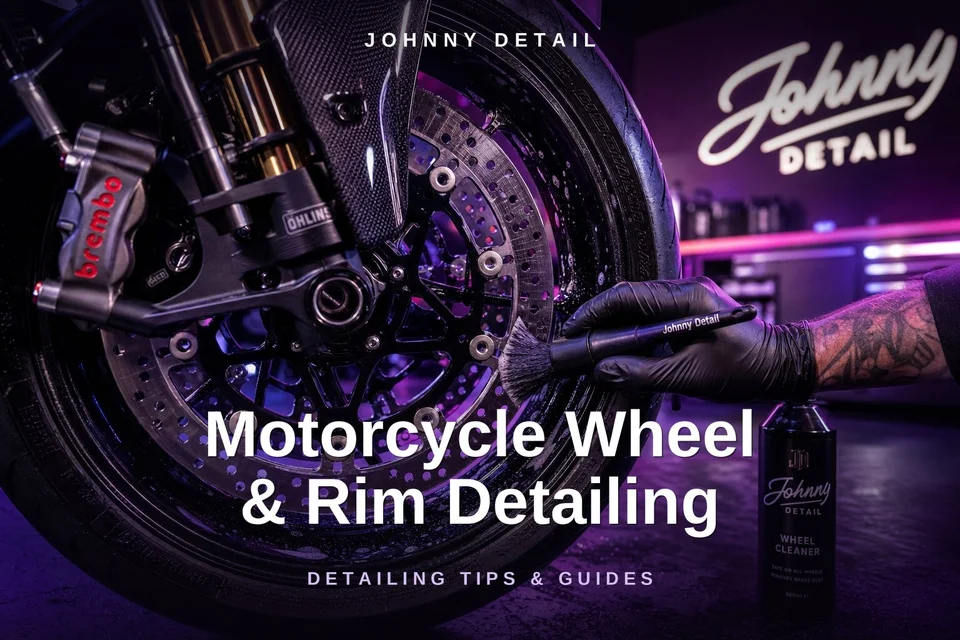
Motorcycle wheels require finish and brake awareness
Wheel cleaning on a motorcycle is not simply a smaller version of washing car wheels. The brake components are exposed, the machine has a small contact patch, and many wheels combine painted, powder-coated, polished, anodized, plated, or bare-metal surfaces. A cleaner or polish that suits one finish can stain another. Before starting, identify the wheel material and coating from the owner’s manual, wheel manufacturer, or reliable service information. If the finish is unknown or already damaged, test cautiously or ask a motorcycle detailer or wheel refinisher to assess it.
Prepare the motorcycle and work area
Allow the motorcycle, brakes, and exhaust to cool. Park on a stable surface and secure the bike according to its owner’s manual; do not improvise lifting points or rely on an unstable stand. Inspect tires, valve stems, wheel weights, bearings, fasteners, brake hoses, discs, and pads for obvious damage or leaks. Detailing should pause if the tire is compromised, a fastener is loose, the wheel is bent, or a brake component needs service. Cleaning cannot correct a mechanical problem.
Gather separate wheel-only tools so abrasive brake dust is not transferred to painted bodywork. Soft brushes in suitable shapes, clean microfiber towels, a gentle water source, and a finish-compatible cleaner are a practical starting point. Read the product label for exclusions, protective equipment, ventilation, surface condition, and rinse requirements. Avoid household cleaners or a product advertised as universal unless its manufacturer specifically lists the wheel finish in front of you.
Remove loose soil before agitation
Rinse loose dirt and grit with a controlled flow while keeping water away from restricted openings and electrical areas identified by the motorcycle maker. Work on one wheel area at a time so the cleaner can be monitored. Apply only as directed and do not let chemistry dry on the surface unless that use is specifically permitted. Agitate gently with clean tools, starting in an inconspicuous area. Clean the wheel face, spokes, accessible barrel areas, valve stem, and hardware without forcing brushes into seals or wiring.
Rinse thoroughly and inspect before repeating. Stubborn material may be tar, chain lubricant, iron contamination, mineral residue, or corrosion rather than ordinary road film. Choose a targeted product only after identifying the soil and confirming finish compatibility. Some iron removers change color during use, but the reaction color does not prove that the product is suitable for every wheel or that the surface is clean. Avoid combining wheel chemicals, and rinse tools before changing products.

Protect brake and tire surfaces
Keep wheel cleaners, metal polish, wax, sealant, dressing, and lubricants off brake discs, pads, tire tread, and other friction surfaces. Do not use a product near the braking system merely because it rinses with water. Apply products to a towel or applicator when that provides better control and the label allows it. If an oily or unknown substance reaches a brake component, follow the motorcycle and brake manufacturer’s service guidance. Do not ride until a qualified technician confirms the braking system is fit for use when contamination is suspected.
Tire sidewalls also need product-specific care. A glossy dressing can migrate onto tread or leave a slick surface where the rider’s boot contacts the motorcycle. Use a tire product only where its label explicitly permits motorcycle use, and keep it away from the tread and braking system. Many owners reasonably choose a clean, undressed sidewall to reduce uncertainty.
Approach oxidation and pitting conservatively
White residue or dullness can indicate oxidation, mineral deposits, cleaner staining, coating failure, or residue trapped around hardware. Confirm the finish before polishing. A least-aggressive metal polish may be suitable for verified bare metal, but it can permanently change anodizing, plating, paint, or a brushed texture. Test a small area and inspect the applicator for unexpected color transfer. Deep pitting, peeling plating, bubbling paint, cracks, or corrosion around fasteners warrants professional evaluation rather than harder scrubbing.
Dry, inspect, and consider protection
Dry the wheel with clean towels and controlled airflow if the equipment and motorcycle guidance permit it. Do not force air or water into bearings, seals, connectors, or brake parts. Inspect recesses for remaining cleaner and check that tools or towels have not snagged wheel weights or lines. Before riding, confirm that the motorcycle is reassembled, the work area is clear, and all normal safety checks in the owner’s manual are complete.
A wax, sealant, or coating may make future cleaning easier on a compatible wheel finish, but protection is optional and maintenance requirements vary. Select a product approved for the exact finish, follow its preparation and cure directions, and keep it away from brakes and tires. Do not use protection to hide corrosion or failed coating. Regular gentle cleaning based on visible condition is preferable to a rigid calendar or repeated aggressive correction.
Motorcycle owners can explore Johnny Detail’s motorcycle detailing services and the motorcycle detailing article collection. For related exterior care, the guides to motorcycle seat care and heat-shield polishing apply the same material-first, test-first approach.
Motorcycle Wheel & Rim Detailing: Banish Brake Dust & Restore Shine FAQ
- How do I identify the correct cleaner for a motorcycle wheel?
Confirm whether the wheel is painted, powder-coated, anodized, chromed, or bare metal using the owner information or wheel maker’s guidance. Choose a cleaner labeled for that finish.
- What precautions matter near motorcycle brakes?
Keep cleaners, dressings, and protectants off brake discs, pads, tires, and other friction surfaces. If contamination is suspected, do not ride until the brakes are assessed by a qualified technician.
- Why does my wheel cleaner turn purple?
Some iron-removal products change color as they react, but the product label should explain the intended reaction. A color change alone does not prove compatibility or that every contaminant is gone.
- How should I handle oxidation or pitting?
Use only a finish-compatible, least-aggressive polish on confirmed bare metal. Stop if plating or coating is thin, peeling, or deeply pitted, and ask a wheel refinisher to assess it.
- Should motorcycle wheels be sealed or coated?
Protection is optional. If you use it, select a product labeled for the confirmed wheel finish, follow its maintenance directions, and keep it away from brakes, tires, and contact surfaces.
Manufacturer resources
Select the instructions matching your vehicle, material, and model year. These manufacturer resources provide care information for the brands and surfaces they cover.

Comments